
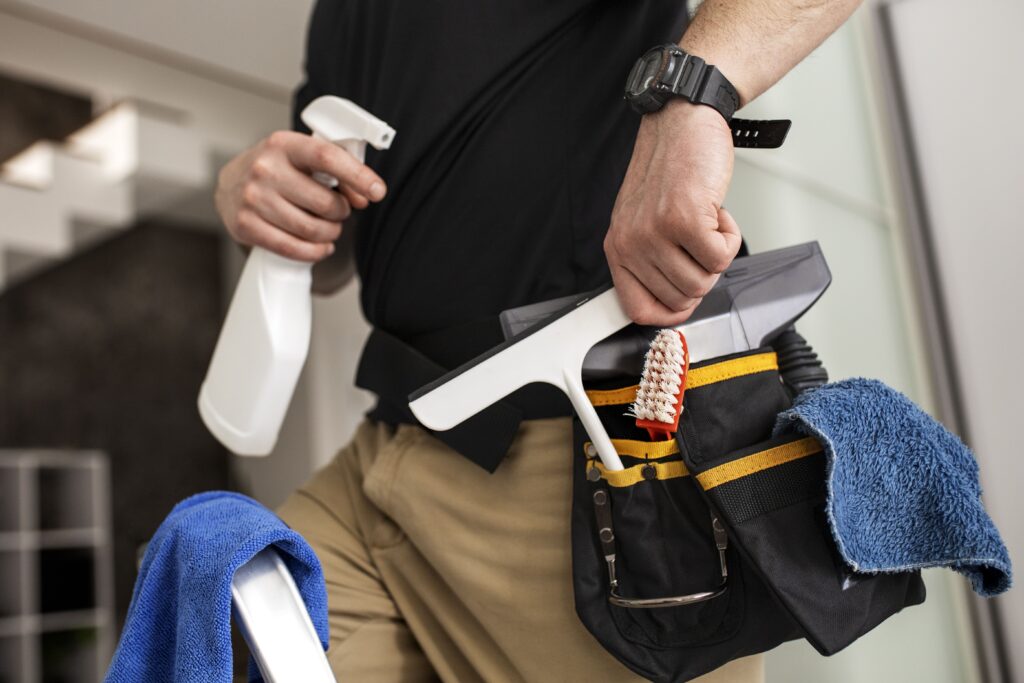
When most people think about cleaning, they imagine a simple service — a vacuum, a mop, a machine, a technician doing a task. But what appears to be a basic function is, in reality, one of the most critical drivers of economic activity. The cleaning industry is not just a support function; it is an engine that keeps businesses moving, communities healthy, and thousands of families financially secure.
Behind every sanitized workspace, polished lobby, disinfected school, or spotless villa lies a network of people, systems, supply chains, and economic pathways that quietly sustain entire sectors. The world sees a service. We see an ecosystem.
Key Takeaways
- The cleaning industry is a major economic driver, not just a support service.
- It creates stable careers that support families and long-term growth.
- Structured systems and ethical leadership fuel sustainable expansion.
- The sector strengthens multiple industries by keeping them operational.
- Cleaning is a foundation for economic mobility, dignity, and opportunity.
Cleaning Is Not Just Mops and Machines — It’s Careers, Families, and Futures
The cleaning industry touches lives in ways that often go unnoticed. Every uniformed professional is supporting a family somewhere — whether in the UAE or across borders. Behind their daily efforts are dreams, responsibilities, and ambitions. This industry provides stable employment, predictable income, and the dignity of reliable work.
It is one of the few industries where skill development is continuous and accessible. A technician who starts with basic training can grow into a team leader, supervisor, trainer, or operations head. Careers are built here — not just shifts.
When you walk into a spotless office or hospital, you’re witnessing not only the result of a technician’s work but the economic chain that keeps countless households running. From training institutes to equipment suppliers, from logistics to building maintenance, the cleaning sector activates multiple layers of the economy every single day.
From One Team to 125+ Technicians — And the Journey Ahead
Growth in the cleaning industry does not come from motivation alone. It comes from discipline, structured training, operational systems, and leadership that believes in people.
At Mega Meter, what started as a small team slowly evolved into a workforce of more than 125 trained technicians. This growth wasn’t accidental — it was built intentionally through consistent processes, technical skill-building, and a value system that prioritised people first.
The vision ahead is even bigger: to build over 2,500+ jobs in the coming years. Not temporary roles, not unstable gig work — but sustainable careers that uplift families and strengthen the economic backbone of the nation.
What Makes This Industry Work? Ethical Leadership and Structured Systems
The cleaning sector thrives when leadership is ethical, recruitment is fair, training is continuous, and systems are strong. Companies that prioritise standards, transparency, and long-term employee growth create environments where people perform with pride, not pressure.
The industry succeeds when organisations choose structure over shortcuts. Reliability becomes a culture. Quality becomes a habit. And the result is a sector that supports national development more than most people realise.
A Foundation for Futures, Not Just Paychecks
It’s time to rethink what cleaning work represents. This industry is not a fallback option. It is a foundation for upward mobility — a pathway that gives workers the stability and confidence needed to build better lives.
Cleaning is growth work. It keeps cities functioning, businesses compliant, and communities healthy. And behind every clean space is a professional whose work enables economic progress in ways far beyond what meets the eye.
Final Word
The cleaning industry may operate quietly, but its impact echoes across the entire economy. Every job created reinforces a family. Every technician trained supports progress. Every service delivered keeps another business running.
If we want stronger communities, safer environments, and more resilient economies, we need to recognise and elevate the industries that make everything else possible. The cleaning sector is one of them — a sector built not just on labour, but on discipline, dignity, and long-term economic value.